Magnum Pleasure Hunt: make the whole game feel like your brand
An editorial analysis of a public campaign, not a Tapmello customer case study.
Chocolate to collect, websites to travel through: Magnum made the internet a playground. The interesting part was how a dessert supplied both the reward for moving forward and the reason to explore.
See the example for your businessmatch flowers and gift details while the bouquet is finished.
Before asking for more elaborate graphics, decide what your customer should recognise, feel and do. A beautiful background cannot answer those questions by itself.
In this case study
Reported figures
Campaign period: First game: April 2011 · report: April 2012
The object you collected carried the idea
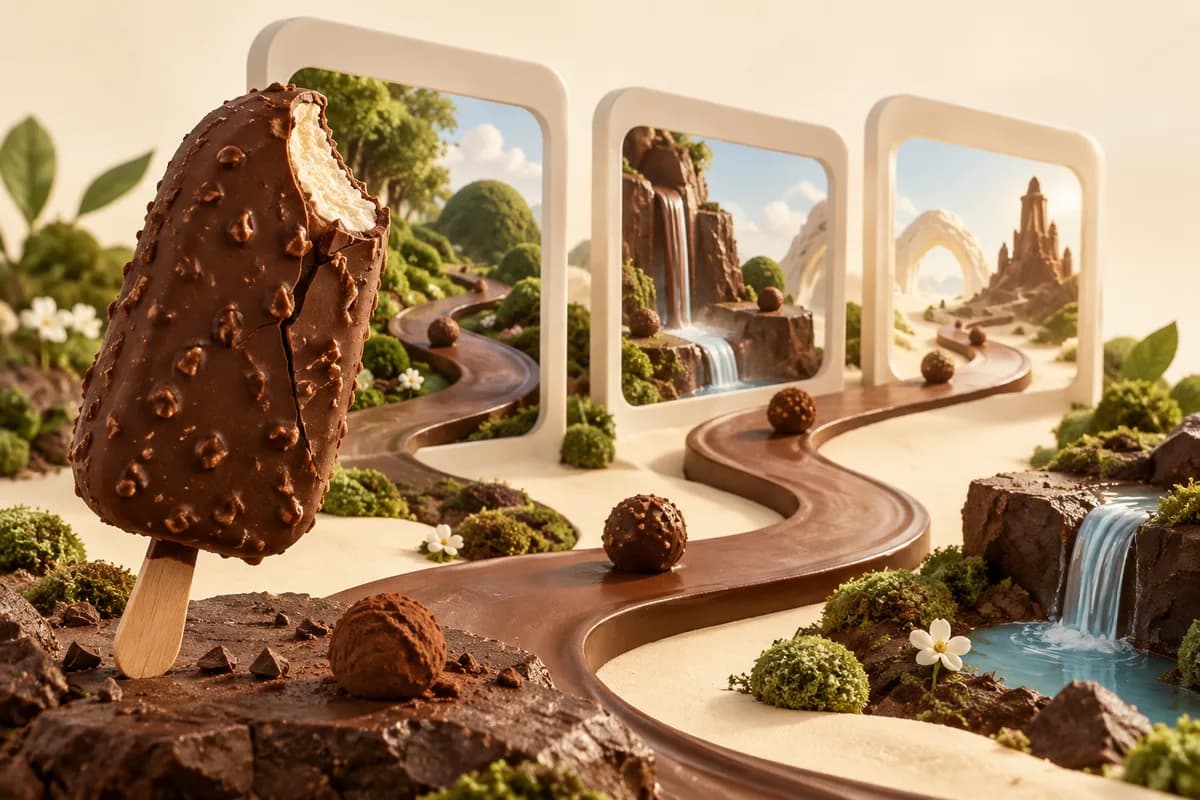
Lowe Brindfors’s Guldägget entry describes a game for Magnum Temptation: run, jump, drive and fly through real websites collecting chocolate balls, an ingredient of the product. [2]
Our interpretation is that the chocolate did two jobs. It gave the player a visible target and made the pursuit feel appetising. A coin mainly says “increase your score.” Something edible can also say “I want that.” The product association was built into the reason to keep moving, where a corner logo alone could never do the same work.
The website setting adds a second useful design idea. In ordinary browsing, a page is something to read or leave. As a game environment, it becomes somewhere to go. Our reading is that this contrast gave familiar online surroundings a sense of discovery. The changing scenery supplied novelty while the chocolate kept the brand idea consistent.
Read the attention figures at their actual scale
The announcement published by LBB in April 2012 reports the first game’s audience and average time. It is a campaign-side account released when the sequel launched, not an independent sales study. [1]
Five minutes is a striking amount of time to spend voluntarily inside a product’s visual world. It makes this a case about sustained attention, rather than a passing impression. That suggests a better creative question than “How often can we show the logo?”: “What interesting thing can happen next while the brand still makes sense?”
The reported time does not establish sales or explain every minute of play. Its useful lesson for a smaller business is to give attention somewhere worthwhile to go. A florist can create a pleasant moment of anticipation while a bouquet is wrapped, without asking a customer to spend five minutes or copy a large production.
Give the artwork a job before generating it
For a flower shop, begin with the feeling of choosing a gift: colour, anticipation and a small personal detail. Then assign each visual element a role. Flowers can be the recognisable objects, wrapping paper can suggest the setting, and a message card can connect play to the purchase.
Describe those roles separately in the artwork brief. A background needs quiet space behind controls. A small object needs a clear silhouette. A text logo needs enough contrast and room to remain legible. Asking every element to be “luxurious and beautiful” leaves the functional decisions unresolved.
Keep one light direction, a restrained palette and similar levels of detail. Test the smallest object at the size at which it actually appears on a phone. If identification depends on zooming into the source image, the artwork is not ready for the game.
Continue the mood at the counter
A florist’s short memory game could end with a message card for the bouquet being wrapped. That is a proposed local adaptation, not a feature of Magnum’s campaign. The card fits the gift occasion and the employee can explain it without changing the purchase journey.
Make the offer specific before promoting it. Is it a standard card or personalised printing? Does the customer need a qualifying bouquet? How many cards are available today? A polished game followed by an awkward disagreement at collection damages the same impression the artwork was meant to create.
Do not make the customer complete a long session while the florist waits. The activity should be optional, and staff should be able to finish the handover normally. A small promotional experience succeeds operationally when it fits around the service instead of competing with it.
Test recognition before expanding the campaign
Show the draft to someone who did not write the brief. Ask what business it belongs to, what they think they can win and where they would collect it. Those answers can expose a mismatch between your intended atmosphere and the actual experience more quickly than another round of image generation.
For a first pilot, use one placement and one small reward. Record starts, completed rounds, claims and redeemed codes separately. Add the actual cost of the cards and the time spent on handovers. This gives you a decision about repeating the offer, rather than a collection of attractive screenshots.
Create a small branded moment at a flower shop
Start with Tapmello’s floral matching game: a rose, a tulip, a sprig, a ribbon, a gift and a message card form six distinct pairs. The objects belong to the same gift-giving moment.
Free to customize. 12,500 KZT publishes one game for one calendar month.
How to run the campaign
- Choose the prepared waiting template The example unlocks a message card after three pairs, at 75 points. Add your own logo and flower-shop artwork around the six floral and gift motifs.
- Agree the handover Confirm the qualifying bouquet, card type, reward stock and collection window with the florist.
- Place the QR beside the wrapping area Rehearse the game in the editor. After publication, check the public QR and real code handover with a colleague before promoting it.
What to measure
Compare started rounds with completed rounds and redeemed cards. Record reward costs and staff feedback. Treat enjoyment and later purchases as separate questions.
This is a Tapmello memory-game template, not a recreation of Magnum’s cross-website game. The message-card offer is our illustrative adaptation.
Florist waiting campaignSources
- Magnum Pleasure Hunt 2 campaign announcementLBB / Magnum · April 4, 2012Reports the first game’s players and time. Figures for the sequel are a different scope.
- Pleasure Hunt — campaign entryGuldägget / Lowe Brindfors · 2012The creator’s description of the brief, chocolate collectibles and website-based world.