Domino’s Pizza Hero: when the product becomes the game
An editorial analysis of a public campaign, not a Tapmello customer case study.
A pizza advertisement can show you melted cheese. A pizza game can make you decide where to put it. Domino’s built a campaign around that difference — and made the finished creation a possible starting point for an order.
See the example for your businessassemble an order while waiting for a pizza.
The useful question for a small business is not whether it can afford Domino’s campaign. It is which part of its product a customer would enjoy doing, choosing or discovering.
In this case study
Reported figures
Campaign period: Launched in 2011 · results reported July 2012
The story started behind the counter
The campaign entry published by The One Club identifies a specific doubt: were Domino’s pizzas actually made by hand? The brand wanted people to understand the work behind the finished pizza. CP+B and development partner UNIT9 turned that preparation into an iPad experience. [3]
That is a much sharper brief than “we need an engaging game.” The subject, the actions and the commercial destination all came from the same product. If you removed pizza from this idea, the idea would stop working.
For a local restaurant, this is a useful planning test. What is worth noticing about the offer: the ingredients, the choices, the preparation or the people? A game becomes more relevant when the answer shapes what the player actually does.
Making dinner became something to practise
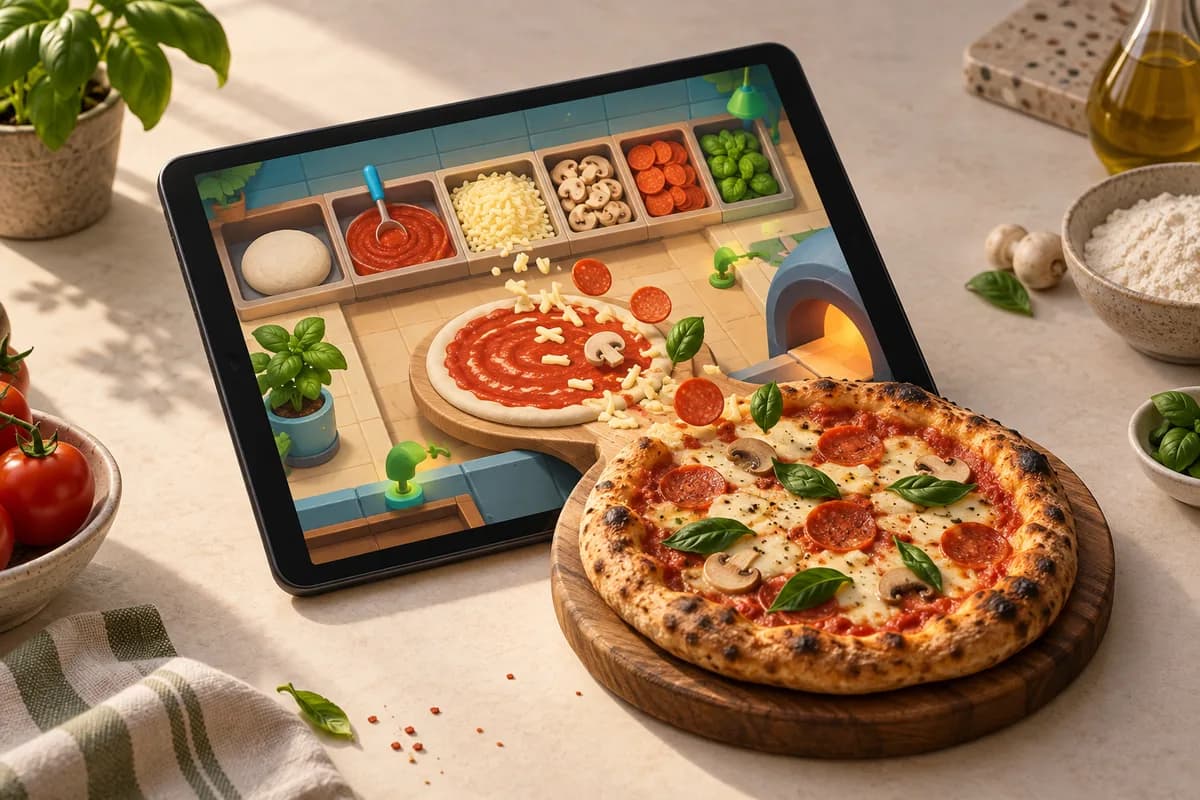
Pizza Hero asked players to stretch dough, spread sauce and add toppings. UNIT9 describes training, extra challenges and a leaderboard, as well as a “Make An Order” option for the pizza created on screen. Its project archive dates the release to November 19, 2011. [2]
Our reading of the design is simple: the player rehearsed the product experience before deciding what to do next. The interaction gave ingredients a role. Cheese was something to distribute; toppings were something to choose. The brand was present in the activity itself.
The ordering route also answered the question that many promotional games leave open: “What now?” The original campaign connected play to an existing ordering service. That connection matters more commercially than another decorative effect on the results screen.
What the results do — and do not — tell us
By July 11, 2012, Domino’s reported more than 500,000 Pizza Hero downloads and more than 12 million virtual pizzas. These are useful signs of reach and interaction with the product, reported by the brand itself. [1]
They do not tell us how many additional real pizzas the game sold. The same release discusses sales from other mobile ordering apps; those numbers should not be attributed to Pizza Hero. Nor do the game totals distinguish a first-time player from a returning enthusiast. [1]
The lesson is to decide which outcome a number represents before celebrating it. A played round measures activity. A redeemed offer records use of that offer. An additional profitable order needs evidence about purchases, reward costs and what would have happened without the campaign.
Three decisions worth borrowing
A small business does not need the original production budget to apply the underlying decisions. It does need a coherent connection between what it sells, what happens on the screen and what staff will honour afterward.
- Give the product a job in the game Use recognisable ingredients or product parts as things to select and assemble. A logo on an unrelated obstacle is much less specific to your offer.
- Fit the activity to the customer’s situation Someone waiting for a takeaway order needs a short round with an obvious start. A lengthy tutorial competes with the collection announcement and the rest of their day.
- Choose one next action A dip with today’s pizza and a discount on next week’s order solve different problems. Give each its own invitation, reward terms and measurement.
At a local pizzeria, start with today’s wait
Imagine a QR card at the pickup counter: “While your pizza bakes, choose six correct ingredients and unlock a dip with today’s whole pizza.” The person already knows why they are there. The game gives the waiting moment a small, relevant activity; the reward is easy for the employee to explain.
This is an illustrative small-business adaptation, not a description of Domino’s rollout. Start with a limited reward stock, one redemption per code, clear eligible orders and a short collection window. Staff should verify the code rather than accept a screenshot as proof.
Budget for the experience honestly. If an already-paid order receives a complimentary dip, that order is not new revenue caused by the game. Record the cost of the dip and the work required to distribute it. Compare participation and redemptions against that cost before repeating the campaign.
A useful pilot budget is 12,500 KZT for one published game for a calendar month, plus the cost of dips actually handed out, printing and staff time. Divide the recorded total by redeemed codes to see the cost per used offer. Set the reward stock to a cost you are comfortable testing.
If the real priority is a second order, move the invitation to the box and write a separate next-purchase offer. The customer journey changes: the person may play at home and return later. Mixing that with the counter offer makes the results harder to interpret.
The participant journey
- 1. Learn
Pizza Prep School introduces the pizza-making actions.
- 2. Make
The player works with dough, sauce and toppings to create a virtual pizza.
- 3. Order
Make An Order offers a route from the creation to a real purchase.
Build a pizza-counter campaign of your own
The Tapmello starting template uses a short ingredient-selection game. Your guest follows the pictured order, collects points and sees the offer you have configured.
Free to customize. 12,500 KZT publishes one game for one calendar month.
How to run the campaign
- Start with the prepared pizza template It includes four orders in up to 45 seconds. Six correct ingredient choices earn 60 points toward the sample dip with today’s purchased whole pizza. Check the example conditions before using it with guests.
- Make the offer yours Add your visual style. Confirm the dip, eligible purchase, stock and dates. The game does not need to reproduce your full kitchen or ordering system.
- Rehearse, then share the QR Use the editor’s rehearsal to practise the game and handover with a staff member. After publishing, open the QR on your phone before displaying it at pickup. For real rewards, staff checks the code and paid order, then redeems the code before giving the dip.
What to measure
Track starts, completed rounds, reward claims and redeemed codes by placement. Record actual reward costs. If you attach an order to a redemption, report it as an associated order; that alone does not prove incremental sales.
This adaptation uses Tapmello’s own ingredient game and reward codes. Real pizza orders stay in your usual ordering system.
Pizzeria waiting campaignSources
- Mobile ordering announcement with Pizza Hero resultsDomino’s Pizza · July 11, 2012Brand-issued release. The Pizza Hero paragraph reports downloads and virtual pizzas; the other mobile-app sales figures describe a different product.
- Domino’s: Pizza Hero — creator’s project archiveUNIT9Primary production account for gameplay, the ordering route and release date. Its undated result totals differ from those in the brand announcement dated July 11, 2012.
- Pizza Hero — 2012 One Show entryThe One Club for Creativity · 2012Campaign-entry description of the original brief and creative credits; not an independent audit of commercial impact.