KFC Shrimp Attack: the coupon is part of the game
An editorial analysis of a public campaign, not a Tapmello customer case study.
A new menu item competes with a powerful rival: the customer’s usual order. A photograph may earn a glance, but trying something unfamiliar is another decision. KFC’s Shrimp Attack makes an interesting case for treating the game and the offer as one customer journey, with the restaurant counter as its final screen.
See the example for your businessassemble snack orders to try a new dip, without a purchase.
For a small food business, the opportunity is to make one unfamiliar product worth noticing, then give the customer an offer that staff can actually fulfil.
In this case study
Reported figures
Campaign period: Japan · campaign dates not disclosed
Players redeeming a voucher
Gamify’s reported share; dates and player deduplication are unspecified. [1]
A new ingredient became the interruption
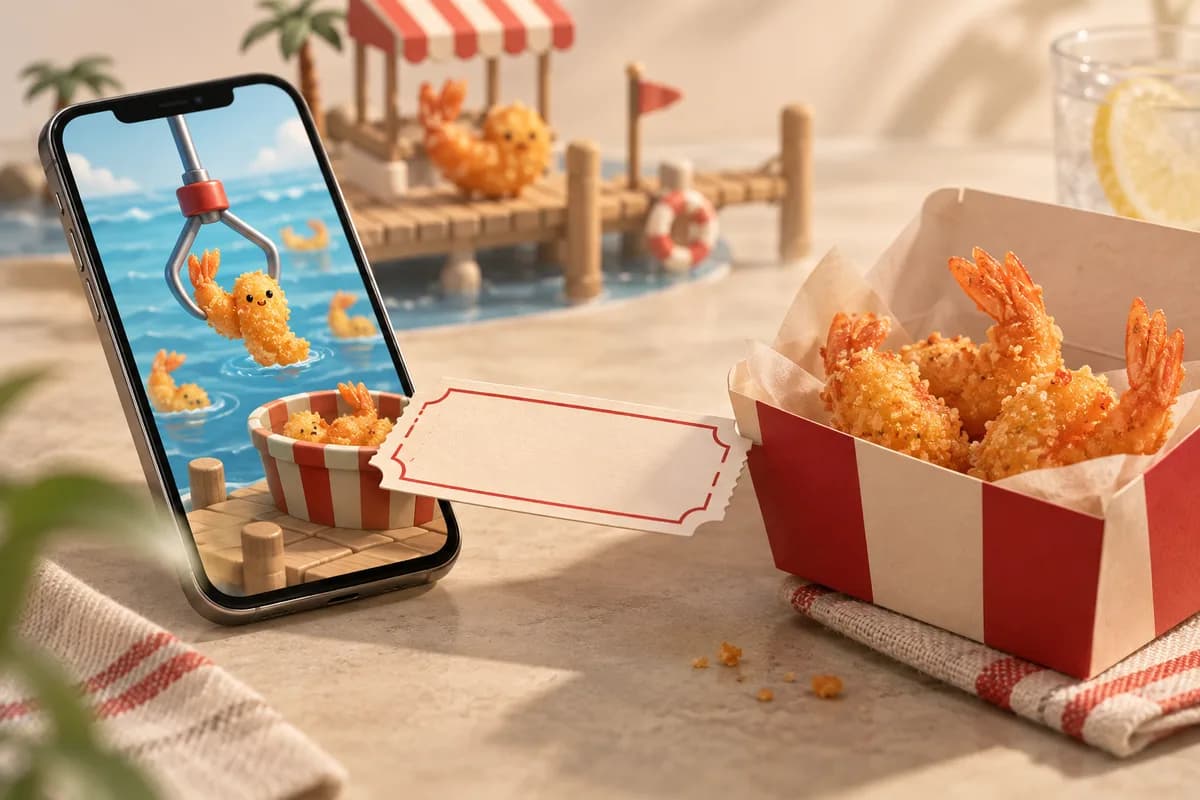
Gamify describes KFC Japan promoting its Ebi shrimp range through Shrimp Attack: players defended a KFC castle against shrimp, with discount vouchers encouraging a product trial. The game developer reports the redemption figure above. [1]
Our reading is that the unfamiliar ingredient had a useful role. It was the event demanding attention on screen, rather than an extra label attached to a generic promotion. The commercial offer then gave that attention somewhere to go.
For your own menu, try this test before choosing an animation: could someone explain which product the game is about after seeing only its main object? If the answer requires a paragraph of brand copy, simplify the visual idea. A recognisable product shape and a clear reward can do more work than several competing messages.
Why a shrimp invasion fits a chicken brand
The creative tension is unusually specific. In a world the customer associates with chicken, shrimp are the interruption. Our interpretation: the game can communicate “something different has arrived” without asking the player to read a menu announcement. The newcomer has a shape and a role in the action.
There is also a useful design risk to notice. The new ingredient is the opponent, yet the food should still seem worth trying. A playful conflict can work as a story, but the reward and product image need to bring the customer back to appetite. Our lesson is to review the emotional role of every branded object, not merely whether a logo is visible.
That gives a local takeaway a more interesting starting point than “add our colours to a game.” If a new sauce is the subject, let the visual choices and the offer introduce that flavour. If assembling a new meal is the subject, make its recognisable ingredients the choices. The game should leave the customer able to name what is new.
Read the denominator before copying the percentage
A redemption percentage becomes useful only when its denominator is clear. Players, issued codes and completed purchases describe different groups. Do not compare a share of players in one campaign with a share of issued codes in another and call one game better.
For your pilot, write down the question before opening the report: did people finish the activity, did they request the offer, and did staff fulfil it? Compare those stages over the same period and allow customers enough time to use their codes.
Also separate trial from additional revenue. A dip handed over with a meal paid for before play improves that customer’s current experience. It does not establish that the game sold the meal. If you want to test a future purchase, create a separate offer for the next visit and link its redemption to that later order.
Make a promise that still works at the busy counter
A promotion should fit the stock and attention your team can spare. Choose one reward that is quick to hand over, set a finite quantity, and agree who checks codes during a busy shift. A popular game is inconvenient if the person at pickup cannot deliver the advertised offer.
Budget for the published game, the actual cost of fulfilled rewards, printing and staff time. Record missing costs as missing; a blank field is not a free ingredient. Decide what you are willing to spend on this experience before selecting the reward quantity.
Start at one location or one service window. Give separate placements their own trackable links when you expand. If the sign gets attention but few rounds begin, test the invitation and mobile connection first. If people claim rewards but rarely collect them, examine the terms and counter handover before making the game more difficult.
Turn a product launch into a short defense game
Try the prepared Product Defense campaign. The player protects the launch display, breaks three distinct rows of product targets and earns a small gift at a staffed desk.
Free to customize. 12,500 KZT publishes one game for one calendar month.
How to run the campaign
- Build three recognizable target rows The sample asks the player to break six targets for 60 points. Replace the three row pictures with products, ingredients or campaign symbols that remain clear inside a wide, shallow target.
- Agree the launch-desk routine The example provides 30 small launch gifts at one staffed desk without a required purchase. Confirm the exact gift, stock and service hours. Rehearse code checking before handing anything over.
- Publish and test the invitation After publishing, test the QR on the venue connection and place it beside the featured product. Keep the invitation, game and collection point close enough to feel like one experience.
What to measure
Count game starts, completed rounds, claimed codes and gifts actually handed over. Record gift costs. Track product enquiries and paid orders separately; playing or collecting a gift is not itself a sale.
This is a one-button browser game with configurable artwork and a fixed gift. It does not reproduce KFC’s original game, characters or ordering integration.
Food-truck waiting campaignSources
- KFC — creator’s campaign accountGamifyDeveloper-reported results; the page does not specify campaign dates.