Nike Reactland: make the product trial worth doing
An editorial analysis of a public campaign, not a Tapmello customer case study.
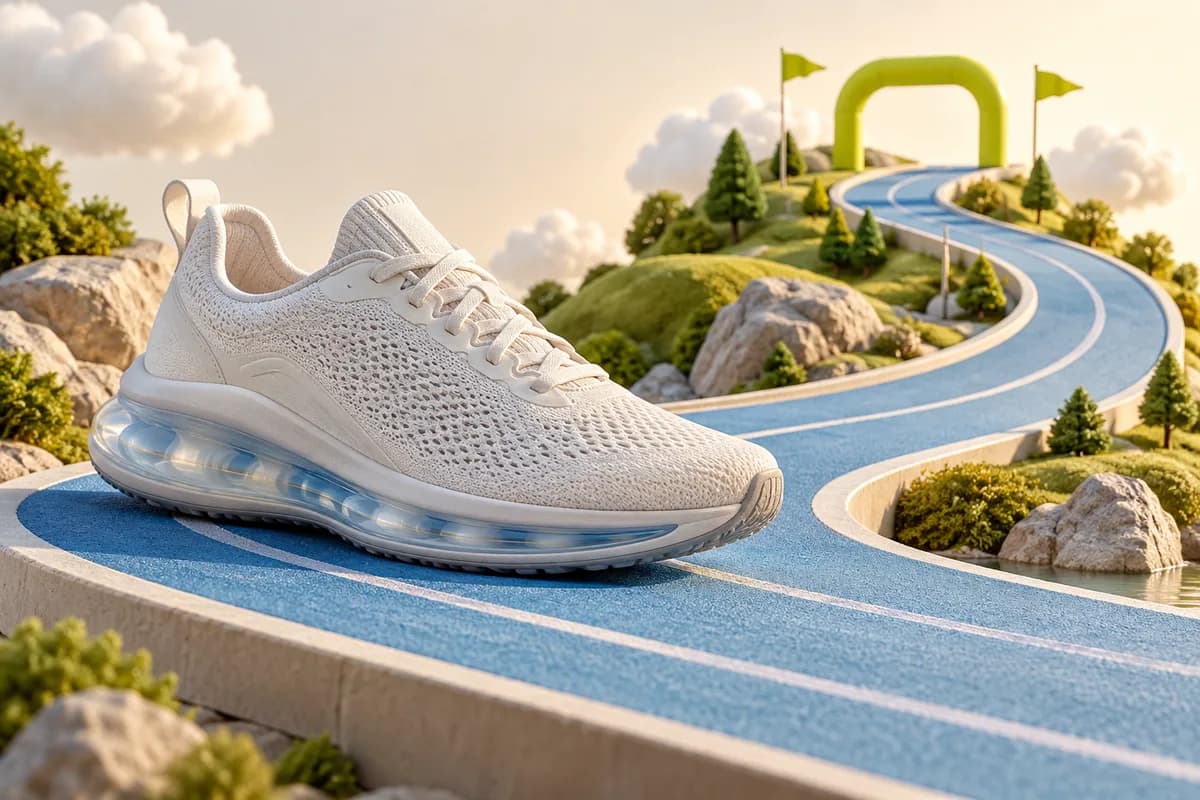
A customer can read about a running shoe’s cushioning. They can also put it on and move. Reactland made that second route entertaining, placing the product trial inside the activity the customer came to enjoy.
See the example for your businessa coffee-machine quiz and a request for a demonstration.
Before adding a game to your shop or stand, ask what customers should understand through it. A useful discovery is a stronger brief than a longer visit.
In this case study
Reported figures
Campaign period: China · March 2018 · one-month activation
Of players bought the shoes
Reported by Wieden+Kennedy for the activation. This is a participant purchase share, not a sales increase. [1]
Give the demonstration a reason to exist
Wieden+Kennedy created Reactland for the Nike React launch, turning an in-store trial into a game across four stores and one pop-up. [1]
Our reading of this choice: the demonstration earned its place because the product was needed to take part. The activity gave a shopper a reason to move beyond looking at a display. The commercial question became whether the experience was relevant to their own use.
That is useful for products people hesitate to buy from a description alone. A customer may need to understand fit, setup, maintenance or the difference between two models. Start by choosing one uncertainty you can resolve honestly; entertainment can help open that conversation.
The customer became the character
UNIT9 describes photographing participants, making personal avatars and having them run on a treadmill in React shoes. Their characters travelled through a virtual world, with a chance to buy the shoes afterward. [2]
The useful design principle is participation with a purpose. Instead of asking the visitor to watch a product promise, the experience made them do something related to it. Personalisation gave the action an individual frame, while the product remained central.
A small shop should decide what it can demonstrate convincingly before choosing effects. A game about luggage might draw attention to compartments; a quiz at an equipment stand might explain cleaning steps. Neither interaction, by itself, proves durability, comfort or performance. Keep those claims tied to actual evidence and hands-on inspection.
A purchase share needs its denominator
The agency’s purchase figure describes people who played during the activation. Its report does not provide the participant count, normal trial-to-purchase rate or a control group. [1]
The number is commercially interesting because it concerns a purchase. It still cannot tell a retailer how much better the game performed than a normal fitting. Participants had already reached a store and chosen to try the product; an online audience opening an unfamiliar link is a different group.
For your pilot, keep the same distinction. Record how many people start, complete the activity, ask for a demonstration and later buy. These stages answer different questions. A correct quiz answer is evidence of a response, not a qualified sales opportunity or a promise to purchase.
Design around the question your customer brings
Our suggested adaptation is deliberately small: use a short activity to prepare a useful product conversation. The employee should be able to connect the game to a real demonstration without inventing a story afterward.
- Choose a real decision Ask which surface an accessory fits or what is needed before first use. Avoid trivia about the founder that does not help the visitor choose.
- Teach before asking for a commitment Make the explanation after each answer useful, including when the player is wrong. A newcomer should leave understanding something without needing an expert score.
- Give the next step a clear owner Name the person or team who will handle the request. Explain what the visitor receives, which purchase conditions apply and when a response is possible.
A practical version for an equipment exhibitor
Imagine a small supplier demonstrating a countertop coffee machine at a trade show. A QR beside the machine invites visitors to explore three practical questions: installation needs, cleaning and an appropriate use case. The answers come from the actual product documentation, and staff can demonstrate the relevant step.
This is our example, not Nike’s rollout. The commercial offer might be one named cleaning accessory with an eligible trial order after the show. State the model, region, availability and ordering conditions. A general promise of a special prize creates work for the sales team and uncertainty for the visitor.
Use a simple budget: 12,500 KZT for one published game for a calendar month, printing, staff time and the cost of accessories actually supplied. Record requests separately from orders. An order connected to a code is useful evidence of use, but does not establish that the customer would otherwise have bought nothing.
Review the pilot with the people answering enquiries. Did the questions reduce repeated explanations? Were customers expecting the right offer? If the game creates more confused requests, improve the invitation and conditions before spending on wider distribution.
The participant journey
- 1. Try
The participant wears the product during the activity.
- 2. Play
A personal avatar turns running into a game.
- 3. Choose
A purchase opportunity follows the experience.
Turn product questions into a useful follow-up
Try the prepared Studio Mini quiz: a fictional coffee machine with a removable water tank, a removable milk nozzle and one brewing group. Its three questions show how a feature becomes a useful choice.
Free to customize. 12,500 KZT publishes one game for one calendar month.
How to run the campaign
- Replace the three sample questions The sample questions cover installation, cleaning and the one-drink workflow. Replace the fictional specifications with your model’s verified features. One correct answer unlocks the example offer.
- Define an eligible next step The sample requests email for a demonstration and offers a cleaning brush with a Studio Mini purchase within 30 days. Replace the model, brush and delivery conditions with the offer your team can fulfil.
- Test the handover with your team Run a rehearsal, check the request route and open the published QR on a phone. Staff should verify eligibility and redeem the code when fulfilling the offer.
What to measure
Track starts, completed quizzes, claims, useful conversations and staff-confirmed redemptions. Keep conversation and order records separate; a score or email address does not qualify a buyer.
This is a browser quiz supporting a real demonstration. Tapmello does not connect a treadmill, scan a visitor or reproduce Reactland’s installation.
Post-exhibition campaignSources
- Nike React: ReactlandWieden+Kennedy · March 2018Agency report for the trial and participant purchase share; no controlled comparison.
- Nike: Reactland — production archiveUNIT9Creator’s description of the physical installation and participant experience.