Burger King Whopper Detour: an offer with a route to an order
An editorial analysis of a public campaign, not a Tapmello customer case study.
A playful promotion needs a commercial destination. Whopper Detour made the journey itself the challenge: unlock an offer, place an order and go to the restaurant that would fulfil it.
See the example for your businessa bag-insert QR and an offer for the next purchase.
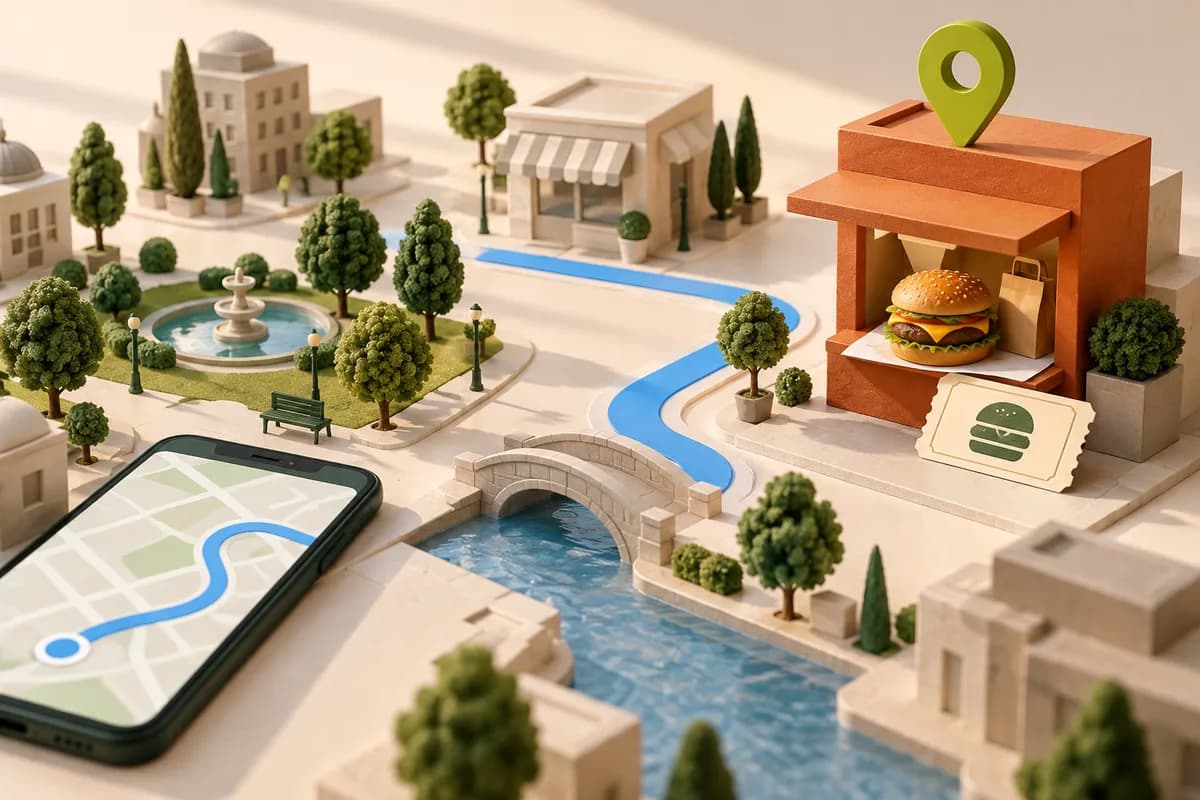
This was a location-based promotion, not an arcade game. It earns its place here because it makes the difference between attention and a used offer especially clear.
In this case study
- Reported figures
- Make a useful app feature worth trying
- The reward came with an explicit route
- Reported transactions are useful; profit still needs a calculation
- Build the promotion backward from fulfilment
- A next-purchase version for a pickup retailer
- The participant journey
- Give the next order a clear invitation
- Sources
Reported figures
Campaign period: United States · December 4–12, 2018
App downloads in nine days
Reported in the One Show campaign entry. Downloads do not identify new customers. [1]
Offer redemptions
Reported by Burger King CMO Fernando Machado in May 2019, citing internal company data. [2]
Sales value through the app
During the promotion versus the previous level, according to Machado. The comparison window is unspecified. [2]
Make a useful app feature worth trying
The One Club’s FCB campaign entry describes the task: draw attention to Burger King’s updated order-ahead app. The promotion unlocked a one-cent Whopper around McDonald’s locations, then directed the customer to Burger King for collection. [1]
Our reading is that the offer created a reason to try a specific purchasing route. An entertaining premise and a usable commercial action were part of the same journey. The promotion could be discussed socially, but the app also had something concrete to do.
For a smaller business, that is a useful filter. If a campaign gets attention, what should happen next: use an offer today, order an accessory later or request a demonstration? Choose one destination before designing the reward screen.
The reward came with an explicit route
Burger King’s launch release specified a single redemption, a 600-foot qualifying radius and the December 4–12 promotion period. The app handled the order before pickup. [3]
The transferable principle is clarity at each handover. The person knows the qualifying action, the offer and where it will be fulfilled. A small promotion should be equally easy to explain, even when staff rather than an integrated app verify the purchase.
Do not copy the physical detour simply because it became famous. It would introduce travel, permissions and operational work that most local campaigns do not need. A QR inside a purchase bag can start a simpler journey: open an activity at home, save a defined offer and show the code on the next eligible visit.
Reported transactions are useful; profit still needs a calculation
Machado’s account distinguishes actual redemptions and app sales from a forecast of around $15 million in additional annual spending on the BK app by Whopper Detour users. That amount is a forecast, not the campaign’s recorded revenue or profit. [2]
Technical partner Rokt/mParticle also reports the nine-day download total. Its later overall download figure and different sales wording should not be combined into one campaign result. [4]
The commercial figures are stronger evidence than impressions alone, but do not answer every question. Channel sales can grow because existing customers switch how they order. Without costs, margins and a suitable comparison, neither a redemption total nor an app-sales multiple proves incremental profit.
Use the same discipline in a small pilot. Two rounded lower bounds cannot provide an exact conversion rate. A redeemed offer confirms use of that offer; the associated order value is a separate observation. Keep those statements precise even when the headline would look better without the qualification.
Build the promotion backward from fulfilment
Our suggested planning method begins where the customer receives the benefit. A memorable invitation cannot compensate for an employee who has never seen the offer or a condition hidden until payment.
- Specify the purchase Name eligible items, locations, expiry and combination rules. “An accessory offer” is a planning placeholder; customers need the actual discount or item before they participate.
- Keep the proof usable Let the customer save the code, then have staff verify and redeem it. A forwarded screenshot should not become a second entitlement.
- Make the destination real Point the action button to the relevant store page or contact route. Requiring the customer to search for where to use a reward wastes the interest the game just created.
A next-purchase version for a pickup retailer
Imagine a local shop selling useful accessories alongside its main products. A card inside the pickup bag says: “Unwrap your next offer: reveal the image and save 10% on one eligible full-price accessory next time.” The next-purchase condition is visible before play.
This is our adaptation, not Burger King’s campaign. Choose accessories that make sense after the original purchase. If your core product is bought infrequently, a short deadline may make the offer unusable. Review the example’s validity and eligible range against actual customer habits.
Budget 12,500 KZT for one published game for a calendar month, plus printing, staff work and the actual discount cost. Limit the reward stock. Practise checking the code before payment, including the case where the chosen accessory is excluded, so staff can explain the offer consistently.
At the review, separate three questions: did people open the invitation, did they save the offer, and did they use it with a qualifying purchase? If claims are healthy but use is weak, inspect stock, terms and the buying cycle. More animation will not fix an offer customers cannot use.
The participant journey
- 1. Unlock
The qualifying location makes the promotion available.
- 2. Order
The customer places the discounted order in the app.
- 3. Collect
The route leads to Burger King for pickup.
Give the next order a clear invitation
Tapmello’s retail Reveal template connects a bag insert with a fixed offer for a future eligible purchase.
Free to customize. 12,500 KZT publishes one game for one calendar month.
How to run the campaign
- Start with the retail Reveal campaign The sample asks players to uncover at least 80% of the image in up to 45 seconds, then save 10% off one eligible full-price accessory next time.
- Define the offer your shop can honour Check eligible products, combination rules, stock, expiry and the action link. The example uses a 45-day code period; adjust it to your purchase cycle.
- Test, publish and put the QR in the bag Run the rehearsal with a staff member and check the published link on a phone. At the next purchase, verify the item and unused code, then redeem it before applying the offer.
What to measure
Measure starts, claims and redemptions separately. Record qualifying order values and discount costs. Associated sales are not automatically additional sales.
This version uses a browser game and staff-verified codes. Tapmello does not locate a competitor, navigate the customer or process the retail order.
Retail next-purchase campaignSources
- The Whopper Detour — FCB campaign entryThe One Club for Creativity · 2019Official award archive; campaign-entered claims, not an independent effectiveness audit.
- Where Detour Was Really GoingThe Millennium Alliance / Fernando Machado · May 22, 2019First-person account by Burger King’s CMO using internal data. Annual revenue is a forecast.
- Order a Whopper Sandwich for a Penny at McDonald’s with the BK AppBurger King / Business Wire via ADVFN · December 4, 2018Syndicated brand launch release confirming dates and offer conditions.
- Burger King: real-time engagementRokt / mParticleTechnical participant’s account. Later total downloads are separate from the nine-day campaign.